Monday, March 09, 2009

42 Orionis nebula (NGC 1977)


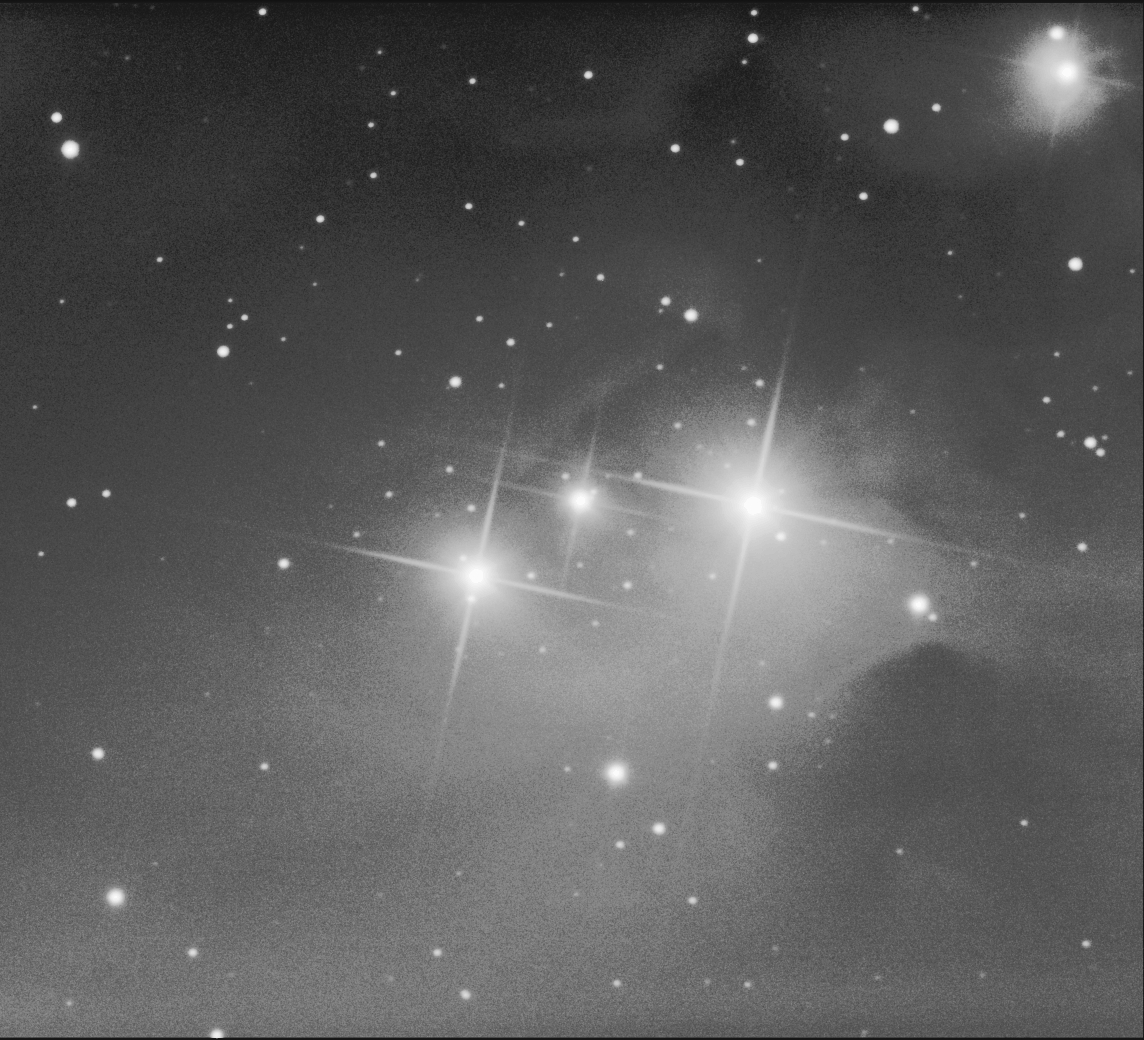
Click to enlarge. A total of 53 images, each 15 seconds each, totaling 13:25 minutes. Taken on December 29th, 2008.

42 Orionis is a bright B1 star in Orion's sword, just to the north of the spectacular Orion Nebula (M42 & M43). It is always overshadowed by its neighbor and many miss the NGC 1977 nebula entirely because the Orion Nebula is almost always glowing in the field of view and very distracting. NGC 1973 is the nebula surrounding the star in the upper right of the frame. 42 Orionis itself is the bright star just to the right of center. The bright star to the left of center is 45 Orionis, an unrelated foreground (370 ly away) star. Unwritten is that this nebula is part of the same giant Orion Molecular Cloud complex that the Orion Nebula is part of.

As always, I am never happy with processing. On this one, there were a significant number of sub-images that were trailed. Normally I align all the subframes and then add the subs together. Since adding will send the pixel values all to 32767 (I use Iris, which is limited to 16 bits), in most cases I utilize either a median combine (which will get rid of the trails) or use "add_norm", which normalizes the final result to fit in 16 bit space. However in this one, I first multiplied all the values in all the images by 0.02, then added them all up, then I subtracted the images I knew were trailed. Some modified equalization and a touch of gamma, and all done. Until I am unsatisfied again.

Thursday, March 05, 2009

3 Nano -- a video project

I created this project originally for the Sights and Sounds of Science contest which was sponsored by the Chicago Materials Research Center of the University of Chicago. This particular version was made for the Five-Minute Film Festival sponsored by NSIT.


Nanocrystals are small collections of several hundred to hundred thousand atoms arranged in a crystal matrix. Quantum dots are nanocrystals made of semiconductors, and the several hundred atoms act like one giant molecule with regards to their electrons with variations in energy levels due to the size of the dot. The smaller the dot, the higher photon energy released during fluorescence.

This video was compiled from fluorescing colloidal quantum dots of different sizes excited by an argon laser. The dots are invisible (with one exception in a microscope at 2:14) but they produce the bright colors in the beam. The bits of bright blue flashes are dust particles in the solutions.

The music is from Ms. John Soda, the song is "Technicolor" from the album No P. or D.

Tuesday, February 24, 2009

Comet Lulin from Chicago

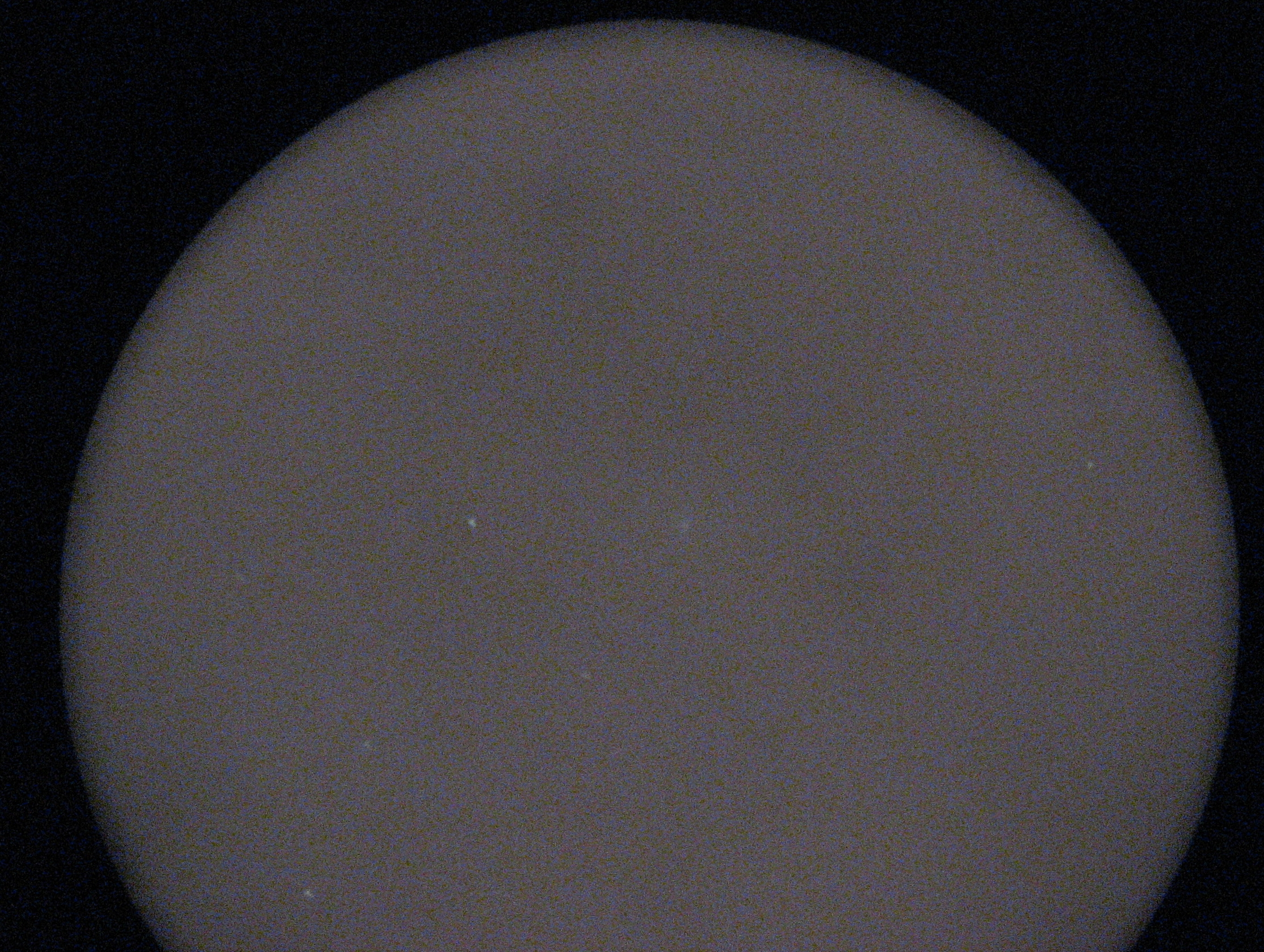
The RAS observed Comet Lulin in Chicago yesterday. Unforunately it wasn't 100% clear, with some sort of high cirrus haze up, and with all the light pollution, only two of us saw the blob that was the comet. For proof of where it was, I took a quick snapshot through the eyepiece to confirm the location for others looking.

Monday, February 23, 2009

astronomical acronym

A cute acronym. It would only be better if the project was one of those requiring exquisite precision in their measurements and error-handling.


Title: The HYPERMUCHFUSS Campaign -- an undiscovered high velocity population
Authors: Alfred Tillich, Stephan Geier, Uli Heber, Heiko Hirsch, Pierre Maxted,
Boris Gaensicke, Tom Marsh, Ralf Napiwotzki, Roy Ă˜stensen and Chris
Copperwheat
Categories: astro-ph
Comments: 8 pages, 6 figures, to appear in the Journal of Physics Conference
Proceedings (JPCS) for the 16th European White Dwarf Workshop, Barcelona,
Spain, June 30 - July 11, 2008

We present an overview and a status report of HYPERMUCHFUSS (HYPER velocity
or Massive Unseen Companions of Hot Faint Underluminious Stars Survey) aiming
at the detection of a population of high velocity subluminous B stars and white
dwarfs. The first class of targets consists of hot subdwarf binaries with
massive compact companions, which are expected to show huge radial velocity
variations. The second class is formed by the recently discovered
hyper-velocity stars, which are moving so fast that the dynamical ejection by a
supermassive black hole seems to be the only explanation for their origin.
Until now only one old hyper-velocity star has been found, but we expect a
larger population. We applied an efficient selection technique for hot
subdwarfs and white dwarfs with high galactic restframe velocities from the
SDSS spectral data base, which serve as first epoch observations for our
campaign with the ESO VLT and NTT in Chile, the 3.5 m telescope at DSAZ
observatory (Calar Alto) in Spain and the WHT on La Palma. The survey is
nearing completion and provides us with promising candidates which will be
followed up to measure their RV-curves to uncover massive companions or prove
their nature as HVS.
\\ ( http://arxiv.org/abs/0901.1030 , 1617kb)

Friday, February 20, 2009

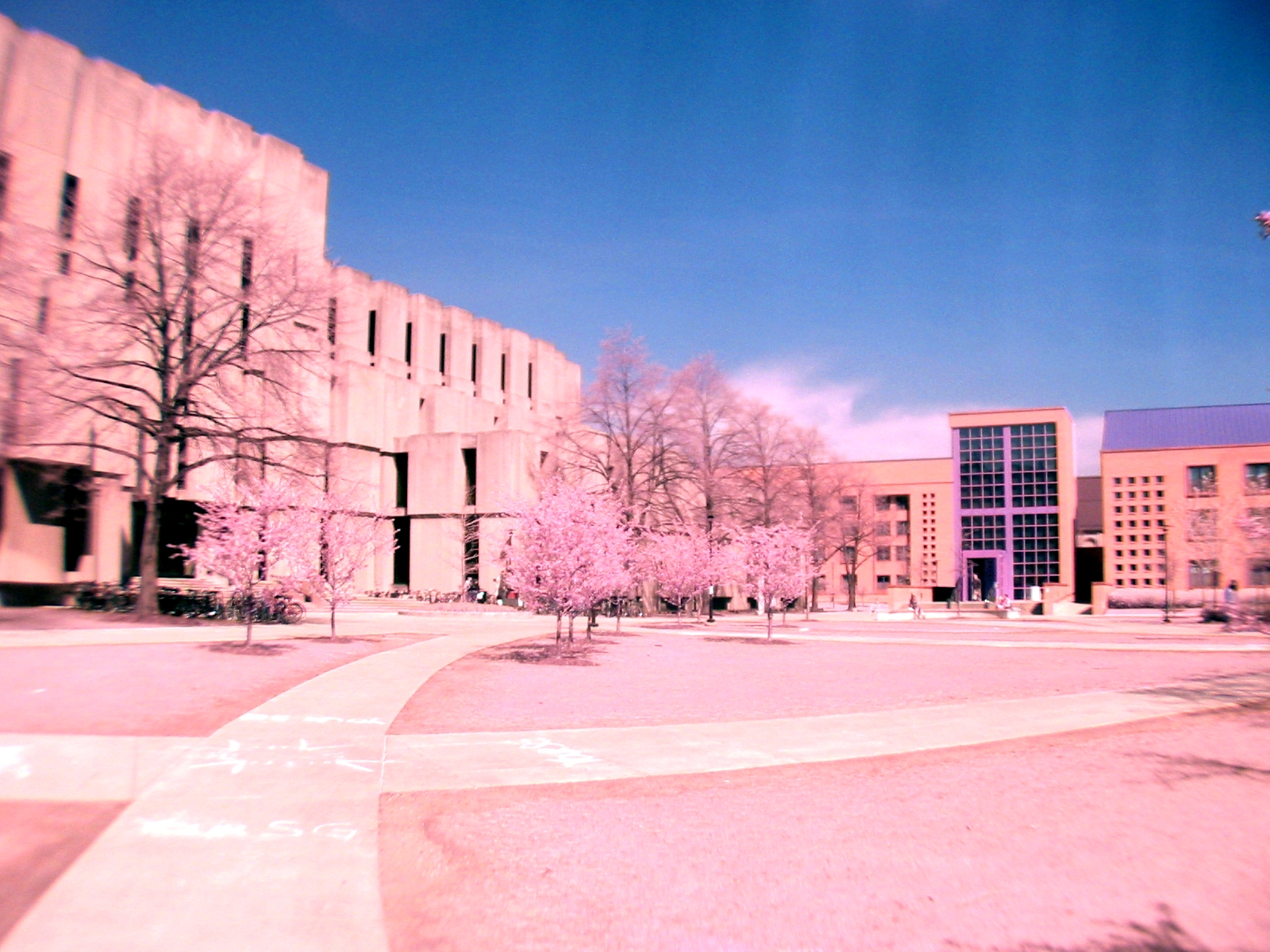
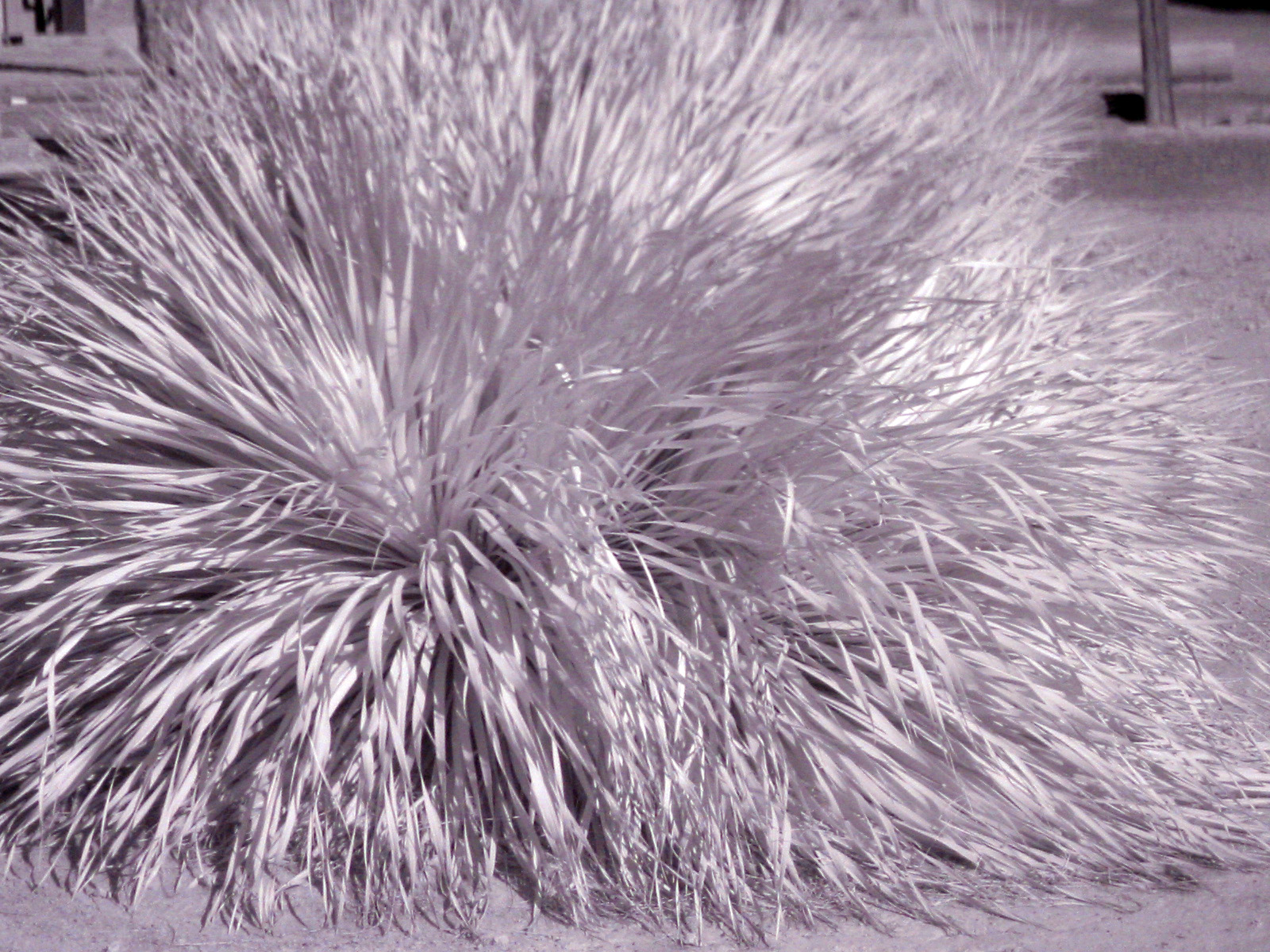
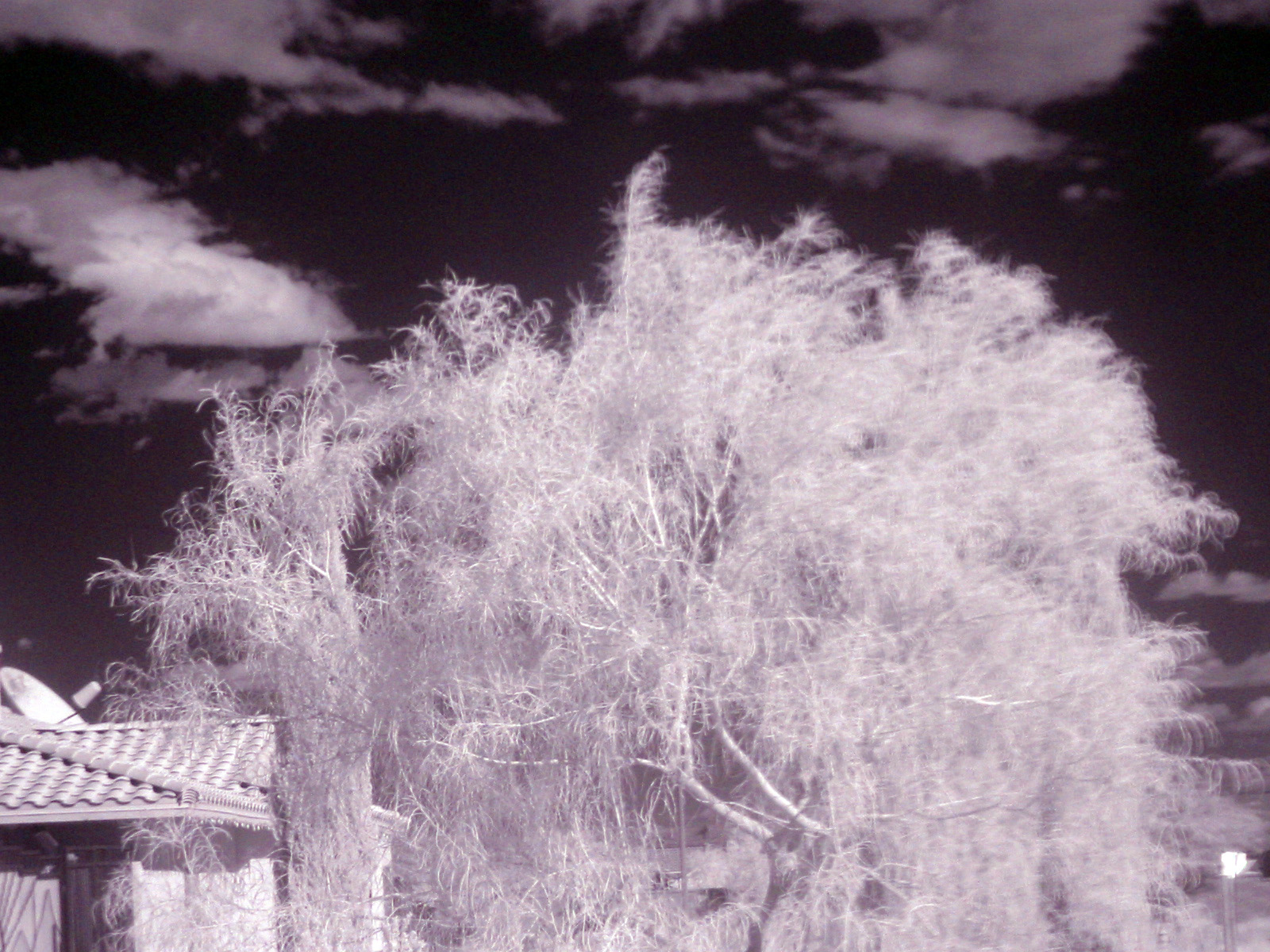
IR focus test: Regenstein Bartlett Quad


Combo visible / near IR image with a Canon S300.
I can't remember if I posted this in the past or not.

Friday, February 13, 2009

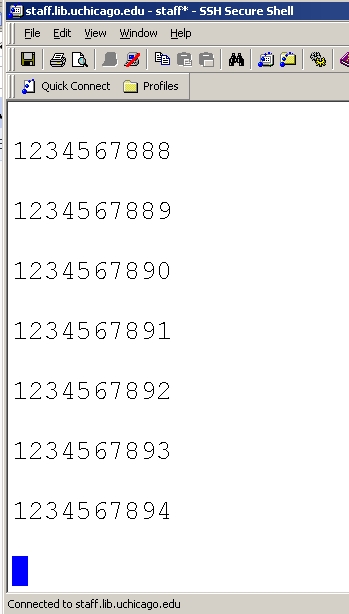
Happy 1234567890 seconds!

Unix time just went past 1234567890; here's a screen shot of a little script I wrote.

Giant's Causeway on Mars

Much like the original Giant's Causeway, the universality of basalt lava exists elsewhere in the inner solar system--including Mars. Here is a very reasonable interpretation of a basalt flow on Mars.
.

I still need to scan my Iceland crazy basalt cooling images.

Wednesday, February 11, 2009

Satellite collision: story to watch for future complications

Two satellites collided in orbit two days ago, creating a spray of debris that will have to be closely watched to avoid further collisions. One satellite was an Iridium, one of the 88 or so in orbit (I see it was #33), and the other was a non-functioning Russian Cosmos satellite. I hope the Cosmos had either ejected the nuclear reactor that some of them use or was non-nuclear. I see another nuclear Cosmos had a problem recently. What's interesting about this collision was the height: at 490 miles, the debris is fairly high enough to have some significant lifetime. As debris densities increase, chances of collision greatly increase, greatly increasing debris densities, increasing collisions, which... you get the idea. These sort of things are really bad for our near Earth environment.

Here's a graph of the two orbits. It was a bad high energy collision.

UPDATE: Animation of the two satellites colliding (in a virtual sense).

Tuesday, February 10, 2009

A gorgeous galactic grauve

Actually not a grauve, but an image:


Make sure you look at the largest image you can comfortably download, and enjoy the relation of the size of the background galaxies to the foreground one. A true sense of the Universe.

From Bad Astronomy.

Saturday, February 07, 2009

Another moon mosaic

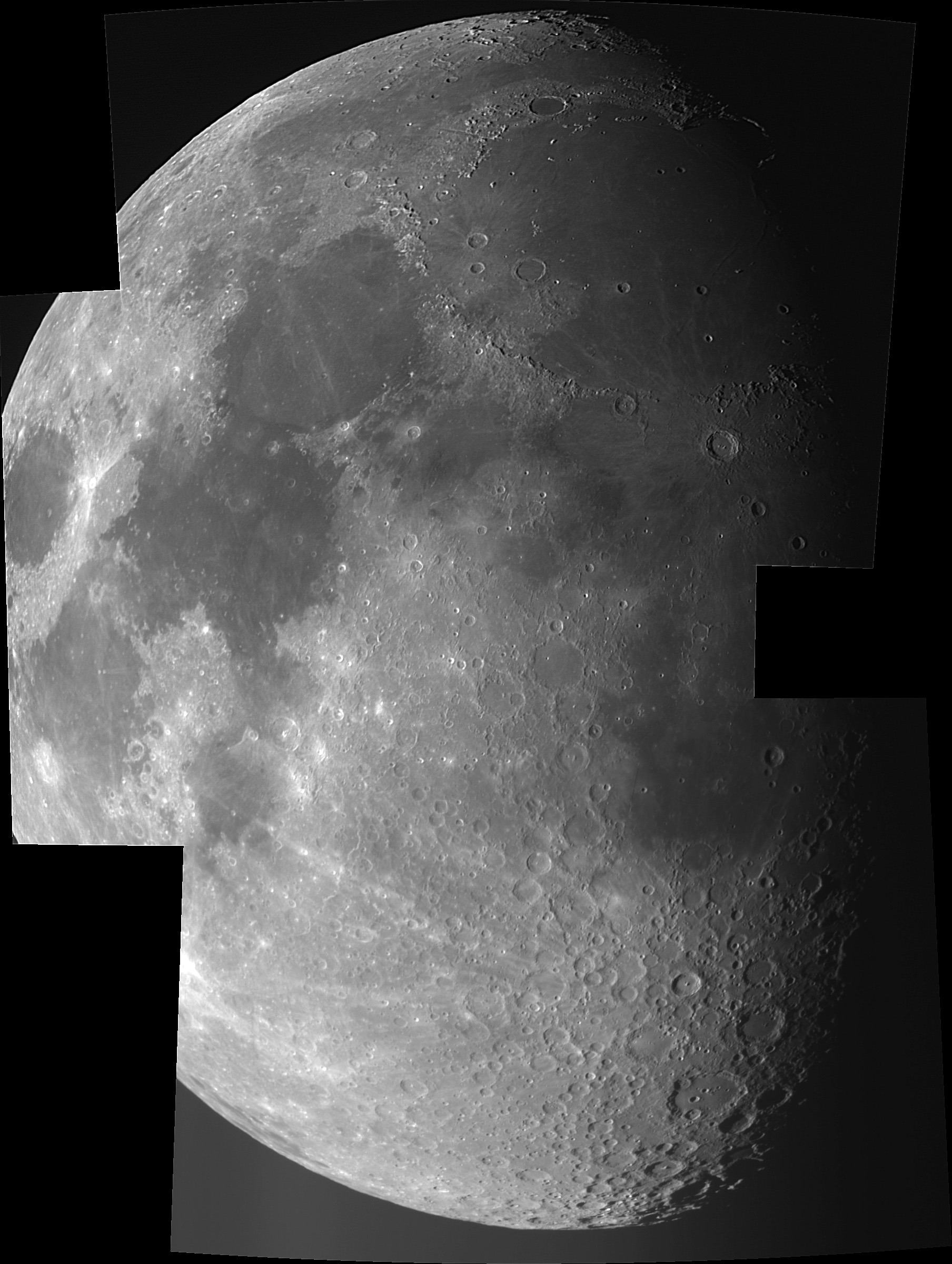
This was taken on Thursday.

Click to enlarge. 2427x2599. A composite of 6 sets of images. Each set is approximately 30 subexposures of 1/1000 seconds. Processed with Registax, Autostitch, and Photoshop.

Friday, February 06, 2009

Science Press Releases

Sometimes I feel for the fellows working the Science press racket. They have to distill the complicated nature of research science into a tidbit that the mainstream media will be able to digest and regurgitate into yet another tidbit.

But sometimes I am annoyed. I feel the words "strange", "mysterious", "hidden", and "stunning" have no place in a science press release. The best ones use direct references to the science, do not declare commonly known principles or phenomena as "mysterious", and work their best to educate the reader about the science being done. They do not use poor analogies. I know a few of the writers, and sometimes problems like these develop not from them but from their employers.

This is not that. And the Register called him out on it. It is in no way the worst example of the science press release. I would be more sympathetic if the writer would take the Register's criticism to heart about that analogy.

Thursday, February 05, 2009

Moon mosaic

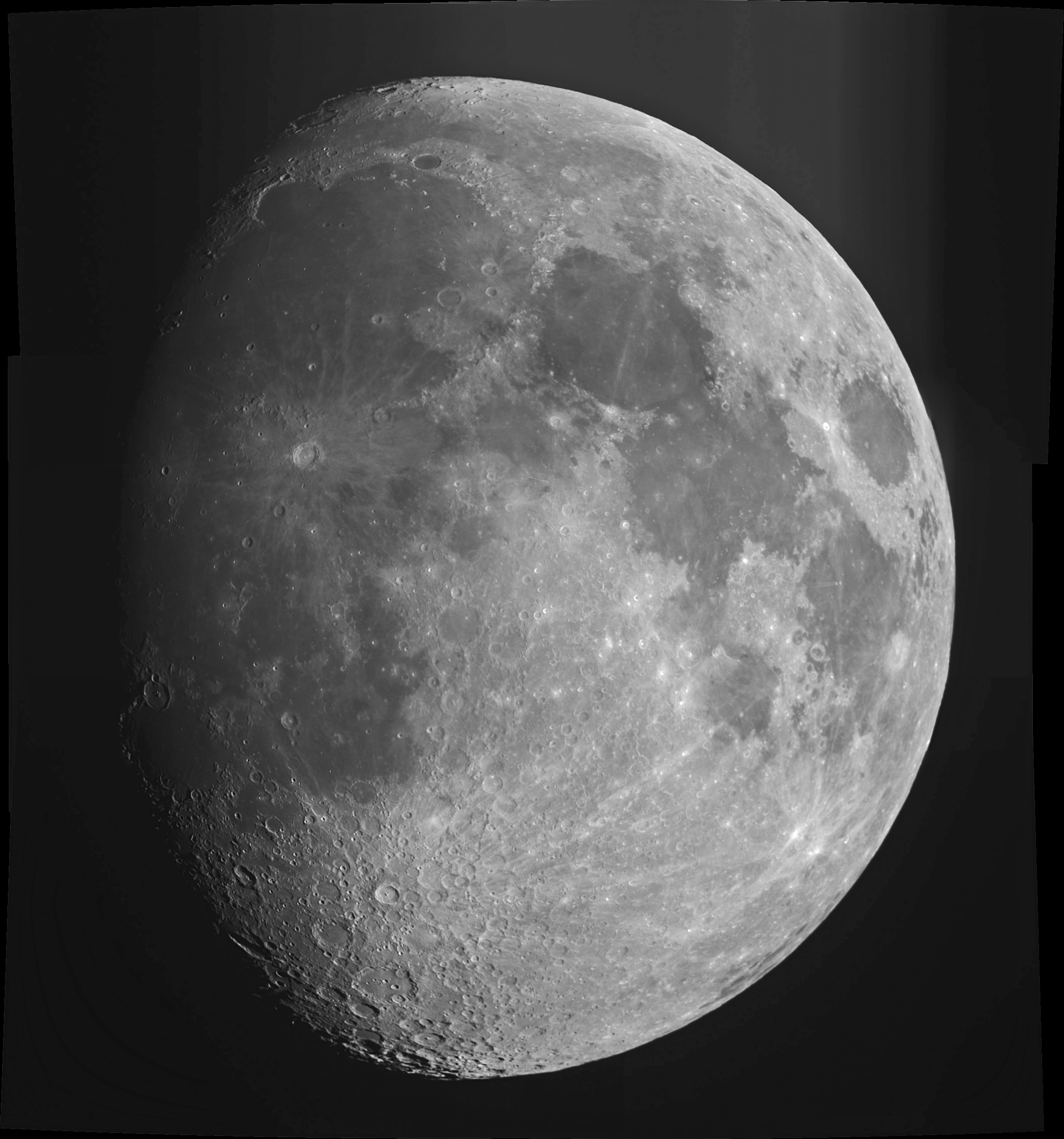
A moon mosaic from last night. I didn't take the images or process them; Will did all that. The only thing I've done is run it through Autolevel in Photoshop. For processing, we took about thirty images each of each section of the Moon with the SXV-H9 camera at 1/1000s, and then ran each set through Registax to get the sharpest ones, then used Autostitch to put the sets together.

Moon Mosaic
Click to enlarge.

Sunday, February 01, 2009

The radio electromagnetic spectrum

This is a great chart of the entire electromagnetic spectrum. If you interested in the more organized allocations of the radio region, see this very detailed PDF chart.