Thursday, March 29, 2007

Space Debris vs. Jet Plane: Debunked


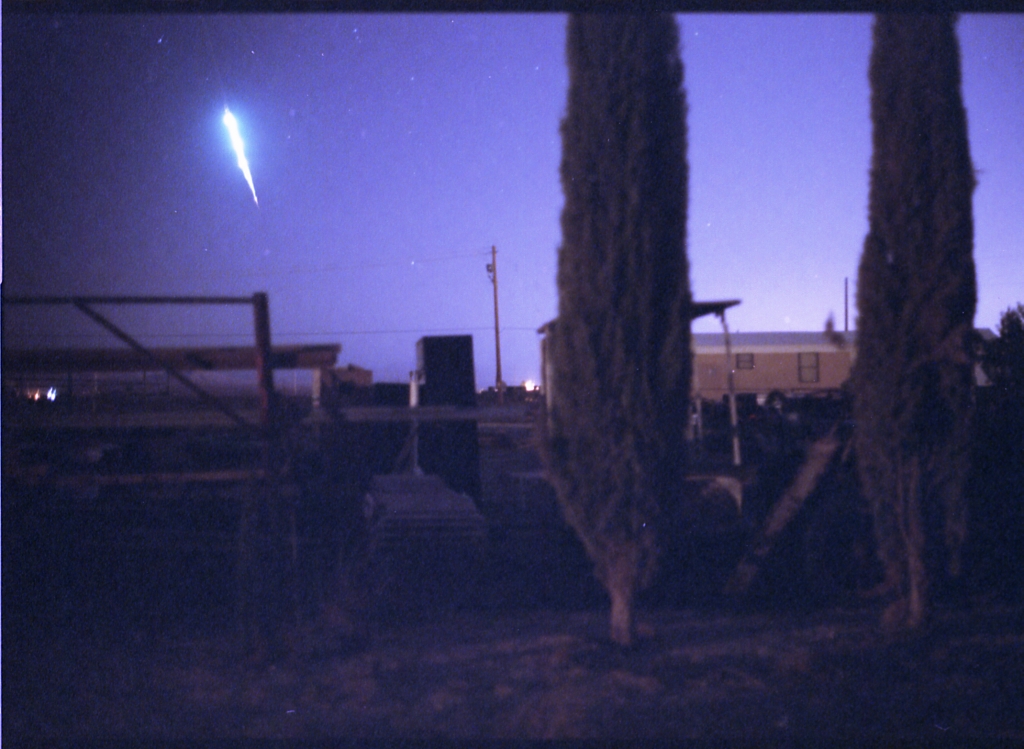
Surely you've read the news story about a Chilean jet narrowly missing space debris near New Zealand. I can safely say, as the story is written, it didn't happen.

Meteors are notoriously described with outrageously close distances-- "extinguished below the horizon", "no more than 3 - 5 thousand feet high when directly above me", etc., despite the luminous portion of the meteor flight starting at 120-75km altitude, and ending by 20km altitude. How did the pilot see this object, if it was no longer luminous, at his flight elevation? Let alone "knowing" it was only five miles away from the plane. Likely, he had received notice that the Russians were deorbiting a satellite that day, albeit twelve hours later, and saw the meteor and mistakenly claims near-disaster.

Pilots have long mistaken meteors as being close--the grandfather of meteoritics,
Harvey H. Nininger, called their reports "humorous at best". In fact, you should read that entire article: http://www.meteoritearticles.com/mitterling17.html.

During Nininger's time a number of airpilots reported having to take evasive steps to prevent collisions with falling meteors. One such newspaper reported an startling account of how a resourceful pilot battled a shower of meteors by making a serious of dips and swerves to avoid the incoming falling meteors saving himself, his eleven passengers, as well as the aircraft. One other pilot was said to have dipped his right wing to avoid a similar collision of a meteor which happened in Nebraska. Yet another pilot near Cheyenne Wyoming said he narrowly escaped injury when en-countering one of those pestiferous fiery projectiles which threaten to side swipe him from the left. He "ducked", however and the missile sailed by, leaving him unharmed.
...
Nininger knew of the fall of those cited above and concluded that the second pilot who thought he saw the meteor below him, plotted the meteor height at the burnout point at about 17 miles high, above the northeastern New Mexico soil. The second pilot who saw the same meteor fall was slightly more than a hundred miles from it at its nearest approach. The pilot over Nebraska that dipped his wing to avoid collision was 68 miles south of the line over which the dreaded missile was speeding at an elevation of approximately 20 miles.


Pilots in the 1920's were having difficulty giving range to bright objects--what makes anyone think they still aren't?

Thursday, March 22, 2007

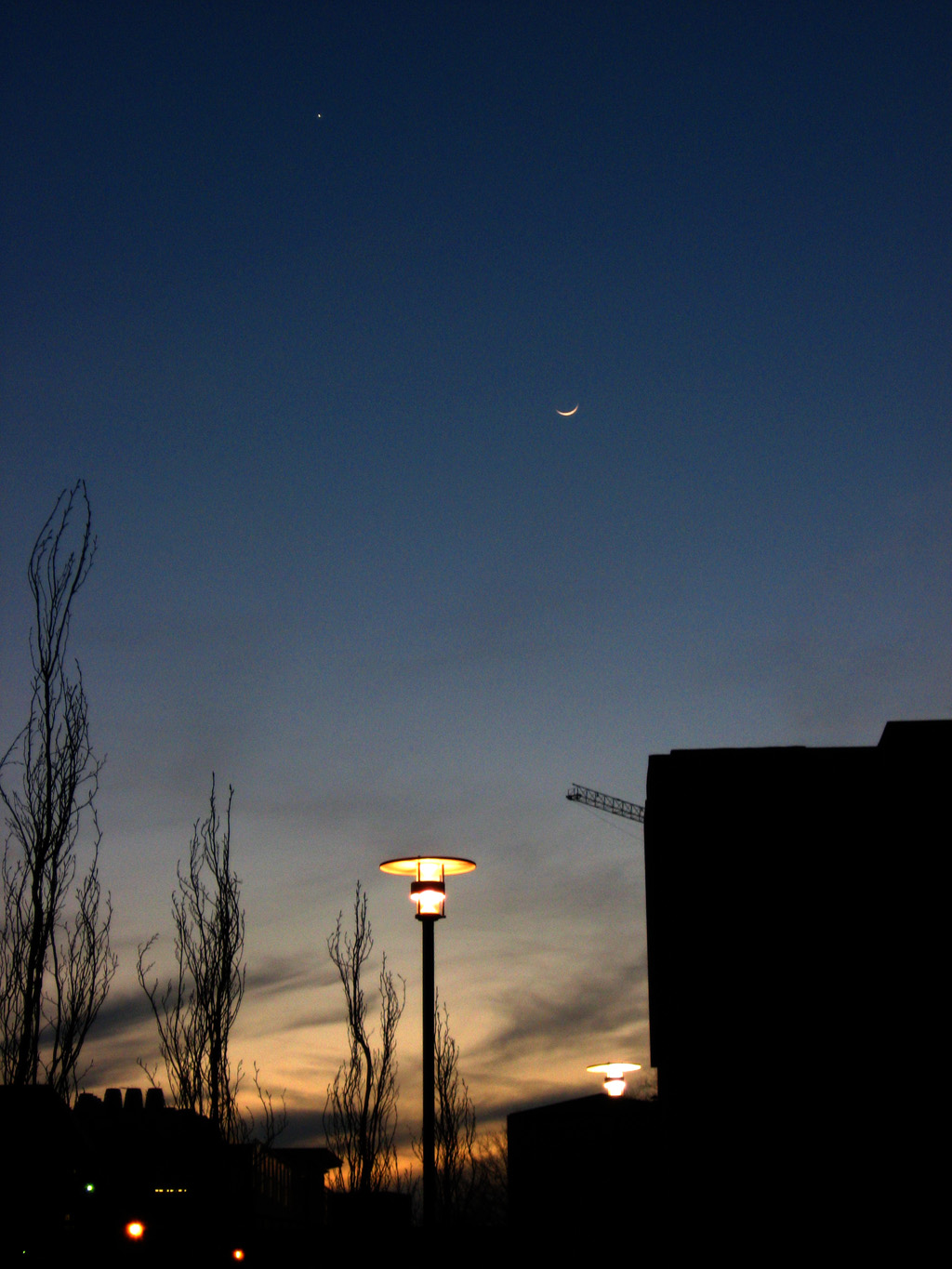
The moon and Venus


The waxing crescent Moon and Venus appeared in the unusually clear evening skies at Chicago on Tuesday.

Tuesday, March 20, 2007

Mars photo filler

I've been bad about posting, so here is an image I assembled from a video taken of Mars on July 30th, 2003. The prominent peninsula to the bottom of Mars is Syrtis Major, the darkest feature on Mars visible from Earth. It's a region scoured clean of any dust, leaving only dark basaltic rock exposed. Extending to the right is Sinus Meridiani, location of the still running Mars Opportunity rover. The bright polar cap is the South Polar Cap. The color fringes are real--real on Earth, that is. Mars was low in the sky, and the Earth's atmosphere acted like a weak lens and bent the colors slightly differently, enough to create fringes (North is to the bottom in the image). Here's a map of the landing sites, and an interactive Google Mars link.

Monday, March 12, 2007

Tvashtar on Io


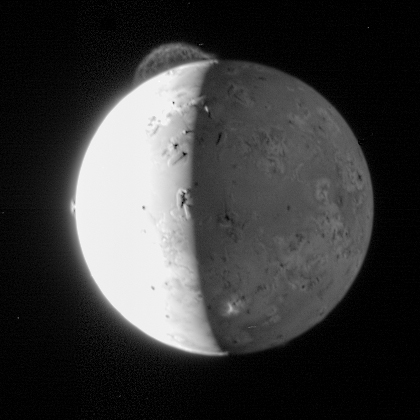
The gorgeous plumes of Ionian volcanos rise into the sunlight on this image taken from the New Horizons spacecraft as it sped past Jupiter. The darkside of Io is seen via "Joveglow". Tvashtar and a seemingly asymmetric plume is at top.

Seen via tingilinde and many other sites -- see more images here

Thursday, March 08, 2007

More snow shadows

Ken commented on the appearence of snow shadows in a Pennsylvanian forest and made an interesting insight: "the snow can actually be considered a very slow acting photographic medium". Which is honestly so true. I also posted two new snow shadows from today.

Monday, March 05, 2007

The lunar eclipse

Chicago got a mostly cloudy eclipse--we never saw it fully eclipsed and only had glimpses as the Moon left the Earth's shadow. Here's a sample of what it looked like from Ryerson Observatory:

Monday, February 26, 2007

The view at Mars from Rosetta


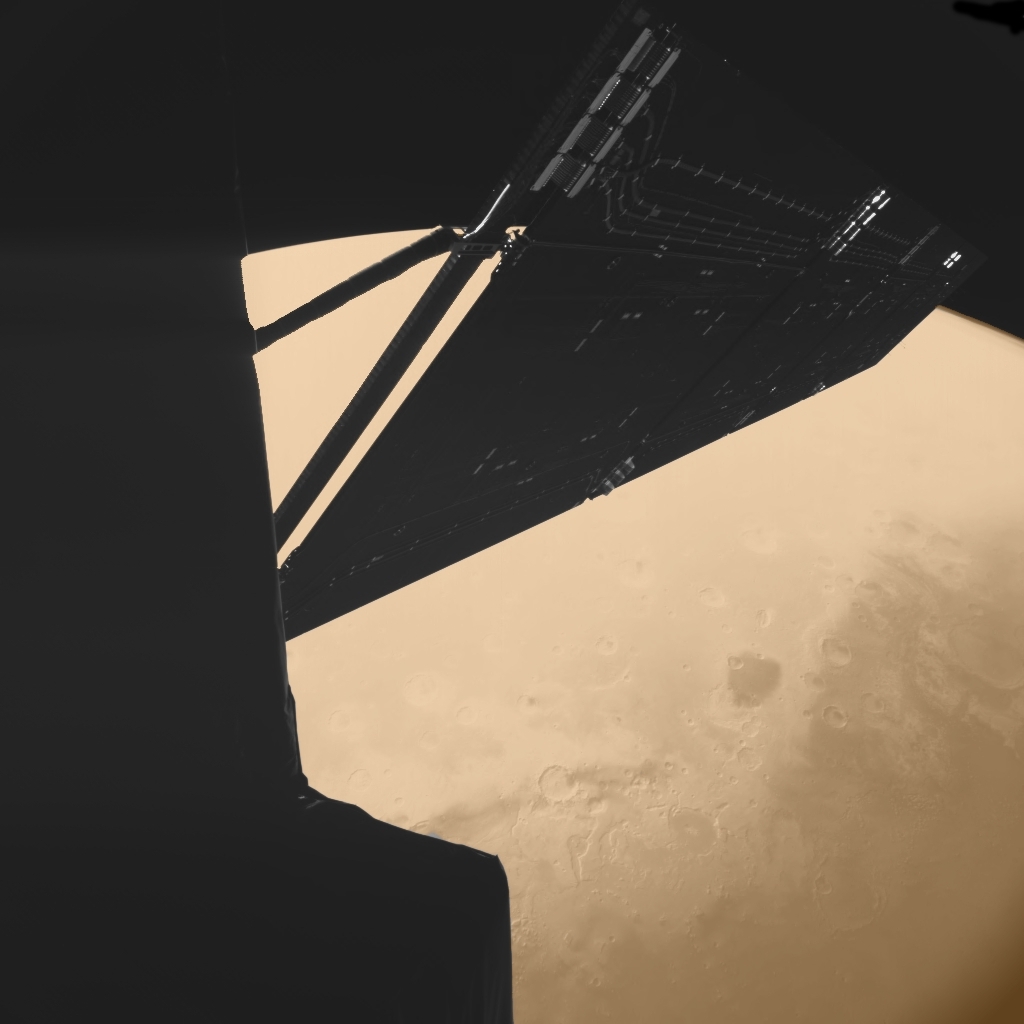
The ESA's Rosetta spacecraft flew by Mars yesterday on its long mission to reach Comet 67P/Churyumov-Gerasimenko in 2014. As is standard, the spacecraft imaged Mars. What's ultimately so satisfying about this picture is perspective; the wholeness of the experience creating by putting a little of the spacecraft in the image. Look at the rest of the Rosetta images; none of them give you a sense of location as the special image taken by the piggyback Philae lander.

We are also only a day away from a Jupiter fly-by from the New Horizons spacecraft, speeding its way to Pluto as fast as it can, hopefully before the Pluto's atmosphere refreezes onto the surface. See where New Horizons is now.

Source: ESA

Sunday, February 25, 2007

Lunar Eclipse Saturday


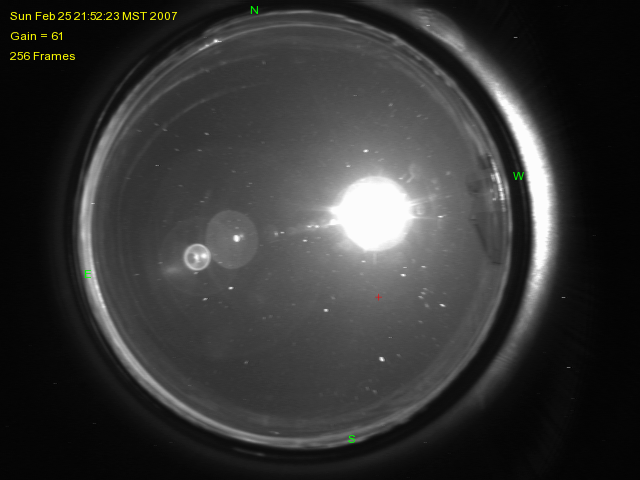
The moon wheels closer to full over the week, moving ever closer to its eclipse on Saturday.

Image source: MMT Skycam.

Friday, February 23, 2007

Jupiter ... from Mars


The impressiveness of the Mars Reconaissance Orbiter's instruments continues to amaze me. Geek Counterpoint has a link to a HiRISE image of Jupiter taken from Mars. See Jupiter close-up or a wide-image of Jupiter and its satellites (10MB JPG). The MRO is expected to return 3.25 terabytes of data during its mission.

Monday, February 12, 2007

More on Adult Swim and the Boston Bomb Scare: the local Chicago angle

This unidentified hoax device was found in a Hyde Park establishment where it has been hanging up for over a year, hooked up with wires to local power lines and emitting a buzzing sound. I frightfully asked an employee to turn it on. Click on the link for a short movie (AVI, 12MB).

Thursday, February 01, 2007

The idiocy continues to spread

Now that the Adult Swim light board is a known, non-terroristic device, Chicago Police Superintendent Phil Cline has saved! Chicago from mass hysteria:

Speaking at a Navy Pier news conference this morning where he had several of the devices on display, Cline noted the illuminated signs—intended to promote the late-night cable TV cartoon show "Aqua Teen Hunger Force"—could have created "chaos" had they been discovered during this weekend's Super Bowl festivities.


Jumping on a bandwagon, eh?

Wednesday, January 31, 2007

The Boston bomb scare and hysteria

CNN report on the ad campaign for a Cartoon Network TV show that closed universities, blocked river traffic, and caused mass overreaction. Instead of deciding that we as a society have overreacted and cost ourselves millions of dollars of lost productivity, we'll blame the LED throwies. Again, we fool ourselves to think this way. Bruce Schneier will hopefully say something intelligent about it, although the powers that be certainly won't listen. What are the odds a weird device deserves a massive response? Answer: very, very low.

Monday, January 29, 2007

Google Gapminder


Via Scientific American's blog, a link into Google's Flash application of world statistics, Gapminder, accurately described as "the world's most fantastic and amazing piece of interactive infoporn you have ever laid eyes on." Enjoy the animations and the simple first-level presentation, but explore deeper and see the complexity of the tool. One of the first Flash apps worth it.

Tuesday, January 23, 2007

Tonight's State of the Union

CNN is reporting that:
President Bush, in Tuesday's State of the Union address, will propose a plan to cut U.S. gasoline consumption by 20 percent while bolstering inventory in the Strategic Petroleum Reserve, Republican sources say.

The president's 10-year plan to cut gasoline use includes tightening fuel economy standards on automakers and producing 35 billion gallons of renewable fuel such as ethanol by 2017, according to sources briefed on the speech.

One official said the moves would be equivalent to taking 26 million vehicles off U.S. roads.


Great, if they actually do it.
Sounds familiar, yes?

Dropping gasoline consumption by 27% for passenger cars would end all imports from the Persian Gulf--entirely removing our need for trillions in defense for our started wars in the region.

Of course, in mid-2001,
Cheney said telling Americans to do more with less is not enough. "Conservation may be a sign of personal virtue, but it is not a sufficient basis for a sound, comprehensive energy policy," he said.


Now, will they finally get CAFE standards to apply to light trucks and SUVs?
And can they avoid giving massive subsidies to companies that don't need them?
Or will they continue to push the hydrogen/fuel cell car, a technology poorly suited for mobile use?

Last year's comments.