A random survey across the city of Chicago reveals a surprising detail about the growth and compatibility of 802.11b/g networks: The non-overlapping channels, 1/6/11, are not at all uniformly used. Instead 70% of all networks are on channel 6, leaving 16% on channel 11, and only 5% on channel 1! I would bet that most problems associated with wireless networking nowadays have nothing to do with signal strength but rather with interference from co-channel networks. In a separate survey, in a single location, some 30+ networks were detected from inside a brick apartment building.
The survey itself was a bus ride from Midway Airport to Hyde Park via 55th street. The laptop running Netstumbler was closed and sitting in a backpack, with no attempt to improve the signal in any way. 367 networks were detected. It is clear that significant amounts of networks were not found because of the location of the antennas--a previous survey of a few blocks in a well-to-do neighborhood near the University of Chicago (Hyde Park) showed over a hundred networks with a five block walk and a sensitive USB wireless adapter.
22% of the networks did not have encryption turned on. This is not really a bad thing--you shouldn't rely on a completely broken encryption (WEP) to protect your communications. Instead, run a SSH tunnel or a VPN to ensure all communications are secure.
I suppose at this point, from the results of this look, if someone asked me for help about their wireless problems, I'd immediately tell them to switch channels on their access point. A smarter (and probably paid) consultant would scan their location and pick the least populated channel, whatever it was (and odds are it wouldn't be channel 6). That, or switch to the much less popular 802.11a, which runs at 5.8GHz.
Wednesday, December 27, 2006

Thursday, December 21, 2006
Winter Solstice

Ah. Winter solstice has arrived. Hopefully soon the winter gloom will brighten. This afternoon, I was surprised the streetlights didn't turn on in the middle of the day.
Picture from an on-campus web cam.
Wednesday, December 20, 2006
Carl Sagan

Carl Sagan died ten years ago today. Has it really been ten years? I guess I can say it has: new visitors to Ryerson Observatory often do not know who he was and miss some of the symbology of the one-hundred-and-six-year-old refractor they are peering through. What they don't realize is how important he was not to the advancement of science, but to public science education.
He was a student here at Chicago; he was, as the picture indicates, president of the University of Chicago Astronomical Society (now known as the Ryerson Astronomical Society). After his short stay in the college he went to the Astronomy department and left a Ph.D. I quote a visit from John Musgrave, a member of the Society, to Yerkes during Sagan's period there:
I remember the one Yerkes night we had that fall (1958): it was cloudy;
but if it had been clear we could have used any of the telescopes as no
one was using them for research - no one on staff greeted us - just some
"lowly grad students".  Rather than observe we heard a lively spur of
the moment lecture by a post-doc introduced to us in somewhat apologetic
tones -  "we don't know if he is for real or not" - unusual even by U of
C standards. It was Carl Sagan and he spoke about the possibility of
extraterrestrial  life (maybe other things as well - but with Carl I
remember the performance more than the content - including waving
arms).  I guess the "we aren't really sure about this guy" label haunted
him through to the end.
I often wonder what the dismal atmosphere of a coal-smoked Chicago was like for astronomy in the early fifties--and whether the old cranky telescope (fifty-two years old then, in 1952) did anything to inspire future thoughts. His logs are short, and there never seemed to be much observing or possibility of observing. See here for a scan of a sample logbook page. Or here for the entire text of the 1952-1964 logbook.
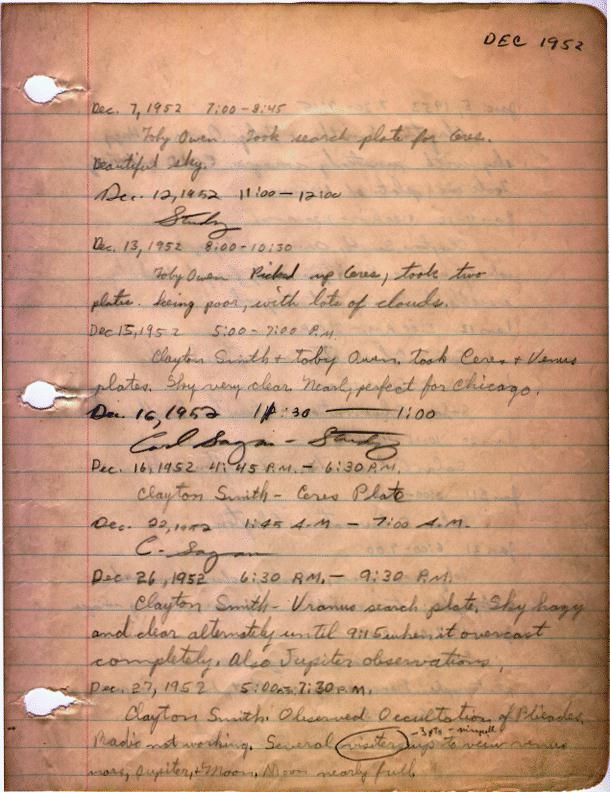

A member of the club in the seventies, when Sagan was back on campus showing off images of the new Viking landers on Mars, got him to sign the logbook yet again. I never met him, but a fellow RAS member at the time, Chris Conselice, was in attendance when they created a graduate student award in the astronomy and astrophysics department. He said he looked quite frail--this would have been 1995 or 96.
Keay Davidson in his biography, "Carl Sagan: A Life", writes:
And atop Ryerson Hall, he and a band of future astonomers learned (with the guidance of the astronomy club advisor, Guy C. Omer Jr.), how to operate equipment in the campus observatory. Other club members included Tobias Owen, who, like Sagan, would go on to a distinguished astronomical career. Sagan ran the astronomy club's "theoretical" section, and arranged speeches by famous professors such as Subrahmanyan Chandrasekhar.
Omer "taught me how to make the right ascension and declination drives go, and gave me a key to the observatory... and so there I was: I could go and look at the stars if ever there was a clear night in Chicago," Sagan later recalled. Yet he wasn't much of a stargazer. The club's logbooks show that Owen and several other members showed up night after night, for years, to meticulously record their observations. But Sagan observed only seven nights between October 1952 and November 1953; and when he observed, he left only terse notes. One searches the logbooks in vain for early fragments of Saganish eloquence. His most vivid entry dates from 2:15 to 3 AM on November 25, 1952, during his sophomore year: "Some [cloud] openings; then clouded over. Also COLD."
...
"Much more important" than stargazing, he later joked, was that at Ryerson Observatory, "I could bring young women to a place where could be undisturbed--which was far and away more important than being able to look through the six-inch telescope!"
In that spirit I leave you with this cartoon from the 1957 Cap and Gown. (My notes have it mislabeled as 1953--it could be 53 or 57, it matters not):

Tuesday, December 19, 2006
Radio Havana Cuba on December 18th
I offer a 30-minute recording of Radio Havana Cuba from December 18th at 8:47PM CST on 6180kHz. Reception was very good here in Chicago. I recorded this via a computer running Audacity through a Degen 1103.
Radio Havana Cuba, 2006-12-18. (30:00, 28MB, 128kb/s mp3). Includes news and music.
Radio Havana Cuba, 2006-12-18. (30:00, 28MB, 128kb/s mp3). Includes news and music.
Wednesday, December 13, 2006
Geminids tonight
If it's clear where you are, drive out into the country, get your warmest gear out, bring sleeping bags, ground pad, and a pillow--and enjoy. Tonight is the Geminid meteor shower. Unfortunately tonight I am suffering from cirrus here at Mount Hopkins in southern Arizona, but hopefully a few clear spots will give us some good viewing.
Friday, December 08, 2006
Radioactive dust on air filters
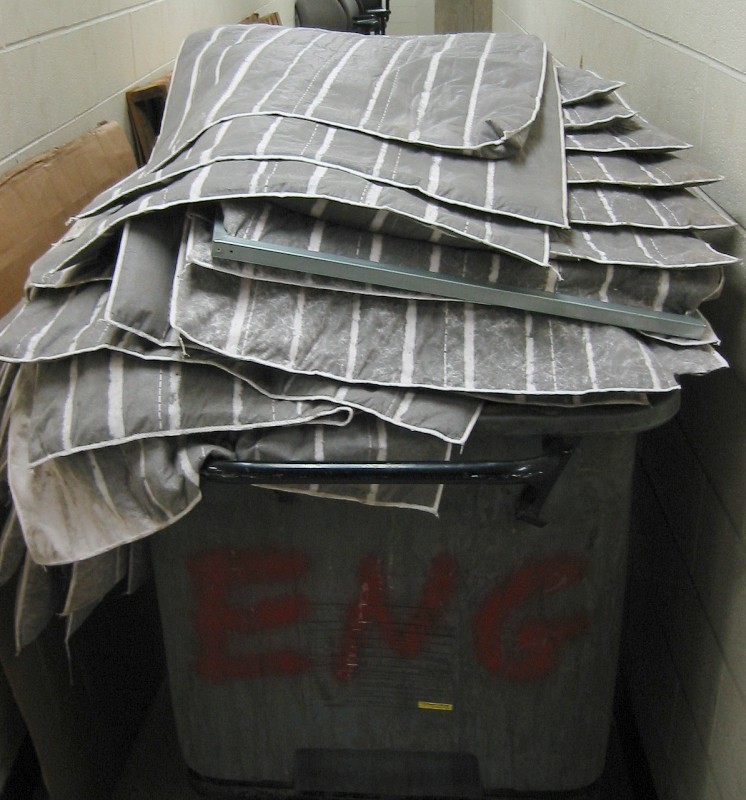
The location where I have my on-line geiger counter is certainly not dust-free: I work in a library after all, and the dust sure looks like paper dust. But the air from outside is well filtered. Since a very easy way to detect radon and its daughter products in the air is to move a large quanity of air through a filter and quickly measure the activity of the picked-up dust, I've tried this out in a variety of places. The result is no radon in my basement office (A-level), no radon in the sub-basement (B-level), but a touch of it in the server room (which has a wall directly against the subsoil).
Yesterday I got lucky: I noticed a trash bin filled with the air filters for the building and took a sample. Sure enough, the readings were elevated. Yesterday it read 11.5 uR/hr with a small piece of the filter against the counter. Today, the same sample read 8.5. (The long-term background average is 7.6).
What's not clear is what radionuclide is the source. I don't know how long the filters were sitting around before I found them. With a radon filter test, it's very important to test as quickly as possible, as you are sampling the short decays of the first four daughters formed from radon-222's decay into polonium 218. That polonium-218 has a 3.05 minute half-life, its daughter lead-214 26.9 minutes, its daughter bismuth-214 19.7 minutes, and the last polonium-214's is only 0.00015 seconds; there's not much time to get a nice graph out of it.

Since the next decay, from lead-210 into bismuth 210 has a half-life of 22 years, I'll never see it unless I had a lot of it lying around. Some researchers use Pb-210 that gets embedded in glass as a long-term measurement for radon levels in old houses.
A topical point is bismuth-210 decays into polonium-210, the poison of Alexander Litvineko which ends the uranium-238 decay chain after decaying into lead-206 (Pb-206)
The whole decay chain for U-238:

Wednesday, December 06, 2006
Recent Water on Mars
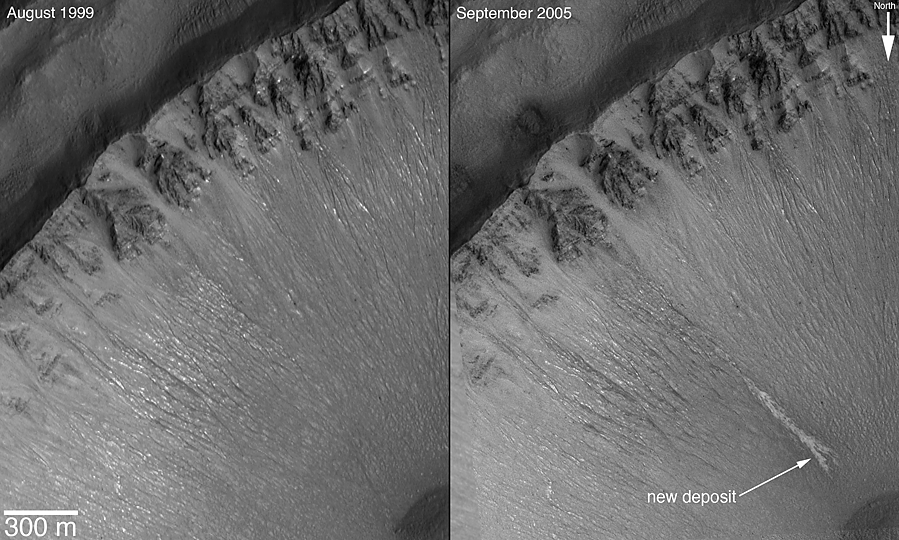
Previous post cut short--because in about linking to Phil Plait's entry about HiRISE images, I just found his link to the press release about water on Mars! Mars Global Surveyor--the one that just died recently-- took images in a southern crater that show a distinct change over the past seven years. A sudden new deposit in a gully on the crater wall.
http://www.msss.com/mars_images/moc/2006/12/06/gullies/centauri_crater/index.html
Image source: NASA/JPL/MSSS
the post-Thanksgiving update
I've been out of acceptable internet access for a week, thanks to broadband company that failed to realize their base stations are critically vital for their network to run. What they save in having no miles of wire and no maintenance of that network needs to be used to keep the base radio stations up and running. If equipment goes down, they need to have replacements available.
But anyways, I see that HiRISE imaging is going smashingly--they have picked up Spirit and Viking 1:
But anyways, I see that HiRISE imaging is going smashingly--they have picked up Spirit and Viking 1:
Monday, November 20, 2006
A better color panorama of Victoria Crater on Mars
Via Wobha, a much better color image of Victoria Crater, as done by Bernhard Braun over at Unmannedspaceflight.com. A warning that the image is big -- 5763 x 1561 (1MB). On my synthesized image of Cabo Frio I used what was available, which meant using an ultraviolet image as blue and near-IR for red.
Saturday, November 18, 2006
Leonids vs. Geminids
Thinking about trying to see some meteors tonight? Don't bother--despite the press about the Leonids (which are spectacular when they are at storm levels), they are normally a rather plain meteor shower. Bundle your blankets, grab your thermal underwear, and wait for the Geminids, a meteor shower on Dec 14th. They are reliably the second best meteor shower annually, just behind the Perseids, which we all love since it's in mid-August. Just get out of town away from light pollution, or otherwise you will be wasting your sky-viewing.
The neat thing about the Geminids is they appear to come from an asteroid-- (3200) Phaeton, rather than a known comet. The simple implication is that Phaeton is just a dead comet, a dehydrated pebble pile.
The neat thing about the Geminids is they appear to come from an asteroid-- (3200) Phaeton, rather than a known comet. The simple implication is that Phaeton is just a dead comet, a dehydrated pebble pile.
Friday, November 10, 2006
fyi image outage for tonight
Just an fyi most images on the blog will be out for about six hours tonight due to a planned power outage.
The curious case of a new variable in Cassiopeia: a microlensing event?
Akihiko Tago of Japan discovered a new bright star in the constellation Cassiopeia on October 31st. Checking back on his images he found the star brightening over the course of a week. New variable stars are discovered rather frequently; novae occur in the Milky Way every year and a few reach naked eye brillance; most are distant and only brighten to 8 or 9th magnitude (which requires binoculars or a telescope to see). In fact Tago is a nova hunter; he photographs the Milky Way constantly in search of new stars. But this new object wasn't a nova.
The new variable in Cassiopeia was identified as being in the same position as a magnitude 11 star--an unremarkable A-type star at 1,000 parsecs, a lot like Vega, which is hotter than the Sun with a surface temperature of about 10,000K. The problem is normal A-type stars are not known for their variability--there are few mechanisms to allow stars of that type to change in brightness, especially by 4 magnitudes. To do so, a star would have to expand 6-7 times in diameter without changing temperature or increase its surface temperature by 2.5x (which would completely change its stellar classification).
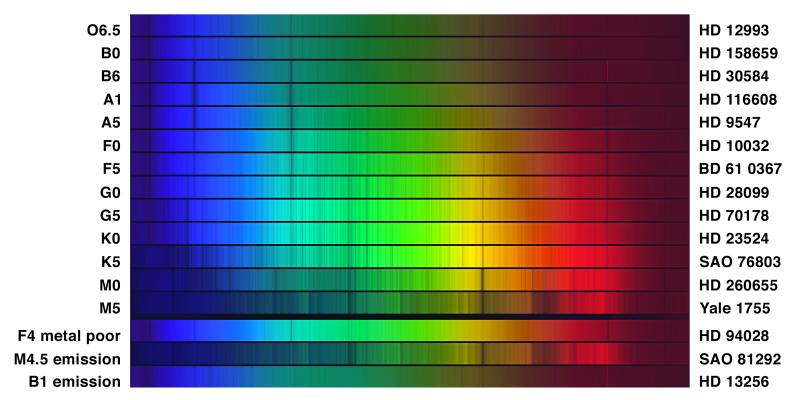
A spectra of the star would help identify what had changed about the star to make it brighten. Robin Leadbeater took one, but at first thought he was getting mixed light from a background star, since it didn't have a prominent hydrogen-alpha line like new nova do. Later spectra though proved he was getting the star itself and the background star wasn't causing a problem. There was simply nothing odd about the star that anyone could see.

M. Mikolajewski, T. Tomov, A. Niedzielski, K. Czart, and C. Galan from Nicolaus Copernicus University then suggested it might actually be a microlensing event--an object passing between us and the star that bent light so as to act like a giant lens for us--and brightening the star by a factor of 40x. This was amazing as microlensing events are very, very rare. A project called MACHO looks at the Large Magellanic Cloud and the center of our galaxy for microlensing events, but out of 18 million stars, they've detected 4 in between the LMC and us, and 45 in the direction of the galactic bulge. To have one affect a star and brighten it to nearly naked eye visibility is astonishing (although other groups have detected more events. See OGLE for example--they get about 500 a year looking at 120 million stars).
Extraordinary claims need extraordinary evidence, though, so everyone is closely watching the star as it fades back to normal. It needs to do so in the exact timeframe that it took to brighten.

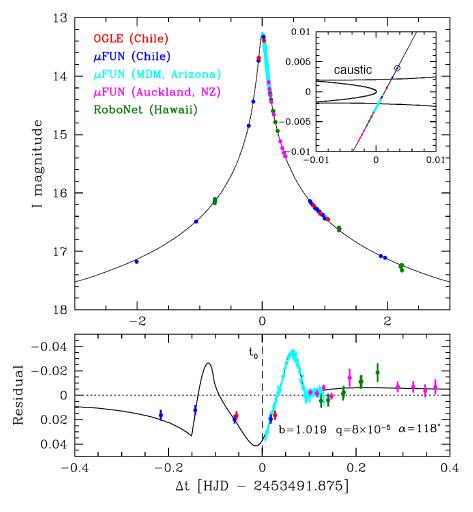
Another interesting possibility is if the lens itself is a fainter star with a solar system, the planets can also microlens the light, albeit for only short periods of a few hours. These spikes on the main event are a hot topic for microlensing studies and exoplanet hunters.
For a "standard" microlensing event, take a look at this one: 4 magnitudes over a few days time.
Interested in the theory behind microlensing? Take a look at this FSU course.
To see the star at or near maximum, see: http://www.irishastronomy.org/

or here, although the star is not marked and is not obvious (magnitude 7.5 stars are a dime a dozen in the Milky Way).
Astronomers will be watching this star closely to see how the light dims in the next few weeks--to make sure it really was a microlensing event!
Wednesday, November 08, 2006
Mercury Transit

We had a rare sunny day in November here in Chicago and so had a successful event with the 2006 Mercury Transit. Click on the image for a few more.
Monday, October 30, 2006
International Space Station pass -- seen through a telescope

The ISS is the largest artifical satellite orbiting Earth -- with 240ft long solar panels and a 150ft long body, its mass is over 227 tons. Being this big, and orbiting at only a 350km altitude, it can be discerned as a non-pointlike object with a normal sized telescope. If your telescope can keep up, that is. The ISS crosses the sky in about five minutes. It's usually much easier just to enjoy watching it look like a bright star crossing the sky (predictions here: Heavens-Above.com)
Mike Tyrrell followed the ISS in his 10" Meade telescope and made a fantastic video, a three minute pass sped up 8x.
The old Mir space station before its demise appeared as a blazing "T" shape in the Ryerson telescope.
Thursday, October 26, 2006
Janus above Saturn

Janus orbits above Saturn, taken from the Cassini spacecraft.
http://saturn.jpl.nasa.gov/multimedia/images/image-details.cfm?imageID=2337
Subscribe to:
Posts (Atom)